During the 2026 legislative session, the Governor, the Iowa Senate, and the Iowa House have each introduced competing property tax proposals aimed at addressing concerns about tax growth and predictability.
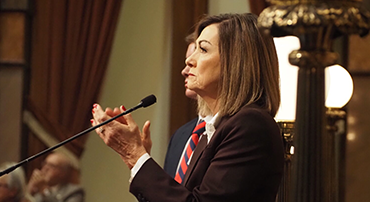
Governor Kim Reynolds’ plan would cap local government revenue growth at 2% plus new construction, extend property tax assessments from every two years to every three, and include targeted homeowner relief. It also includes changes to Tax Increment Financing (TIF) and provides grants and incentives for local shared services.
The House GOP’s proposal similarly caps local tax revenue growth at 2%, creates a $25,000 exemption on residential property, increases transparency on tax notices, and requires higher voter approval thresholds for property-tax-backed bonds.
The Senate’s proposal is more structural, seeking to eliminate the traditional rollback system for residential property valuation and replace it with a revenue-restricted framework that fundamentally changes how taxable value grows over time.
From a business perspective, the Greater Mason City Chamber of Commerce is working with the Iowa Chamber Alliance to review the impact on economic development and regional growth. TIF remains a critical economic development tool that helps communities attract private investment, support redevelopment, and grow the local tax base. The proposed TIF reforms could make North Iowa less competitive. There is also the question of whether broad property tax reform is truly a top priority for businesses, many of whom continue to cite workforce availability, housing, infrastructure, and regulatory certainty as more pressing issues.
As this debate continues, it is important that business voices remain part of the conversation, and that any reform strengthens – not weakens – local economic development efforts. Members are encouraged to contact the Chamber to share their perspective so lobbying efforts can best reflect the reality for North Iowa businesses.
Written by: Colleen Frein, Greater Mason City Chamber of Commerce